feature
Product Update: Permissions Reliability, GitHub Login Fixes, and Integration Defaults
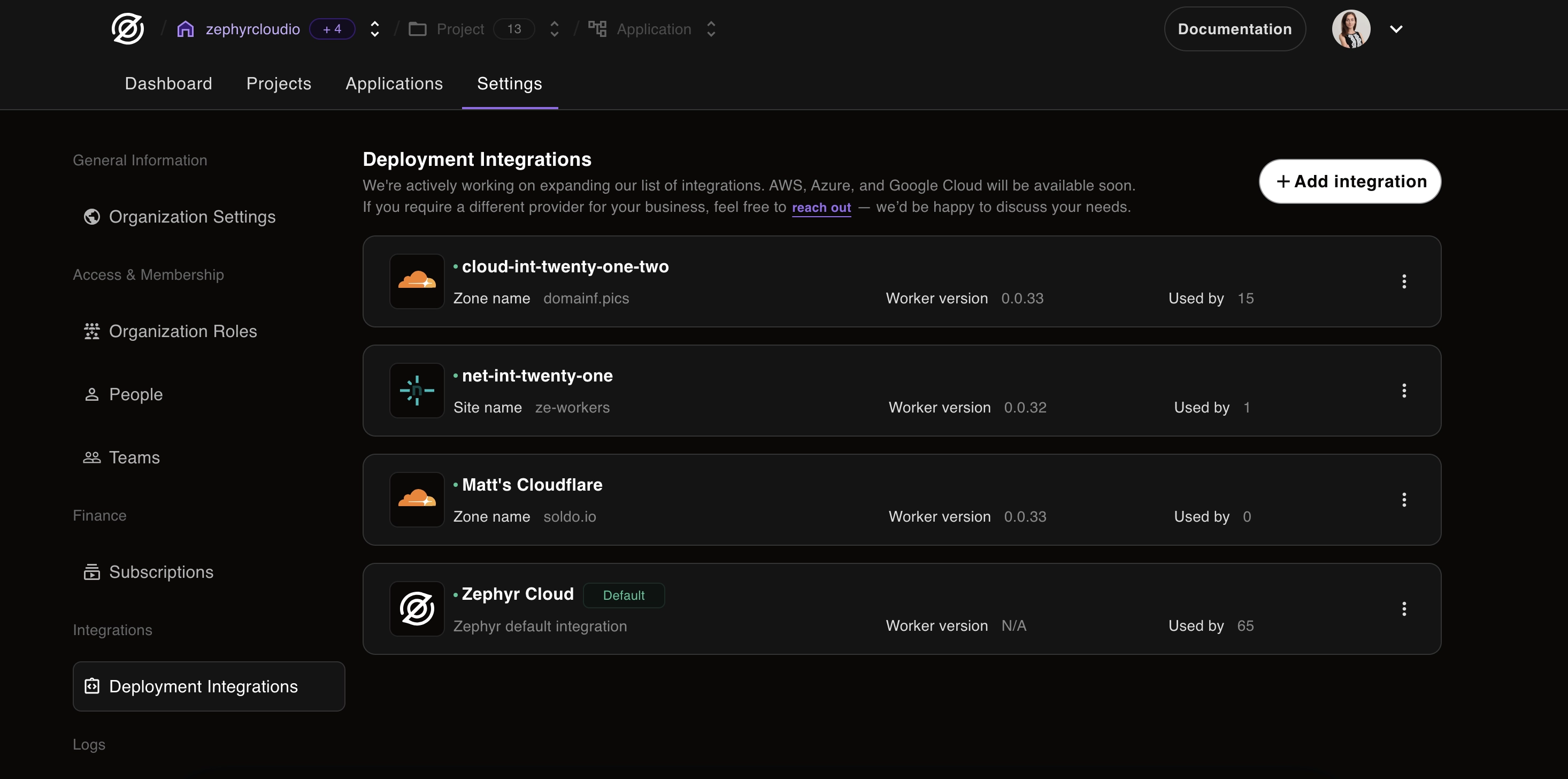
This release fixes permissions for newly created organizations, improves GitHub login reliability, and tightens up integration defaults.
Latest updates and improvements to Zephyr Cloud
This release fixes permissions for newly created organizations, improves GitHub login reliability, and tightens up integration defaults.
This release surfaces who last edited a project, fixes organization logo display across the dashboard, and resolves a billing issue with adding payment cards — plus early infrastructure support for The AI Platform mini-app catalog.
This release simplifies Cloudflare integration setup by defaulting to OAuth, fixes auth token descriptions being lost on rename, and cleans up a few navigation and onboarding rough edges.
You can now connect your Cloudflare account using OAuth, making setup faster and more secure. This release also includes under-the-hood security patches.
Audit logs now show which environment each action occurred in, tags are attributed to who added them, and settings navigation has been restored.
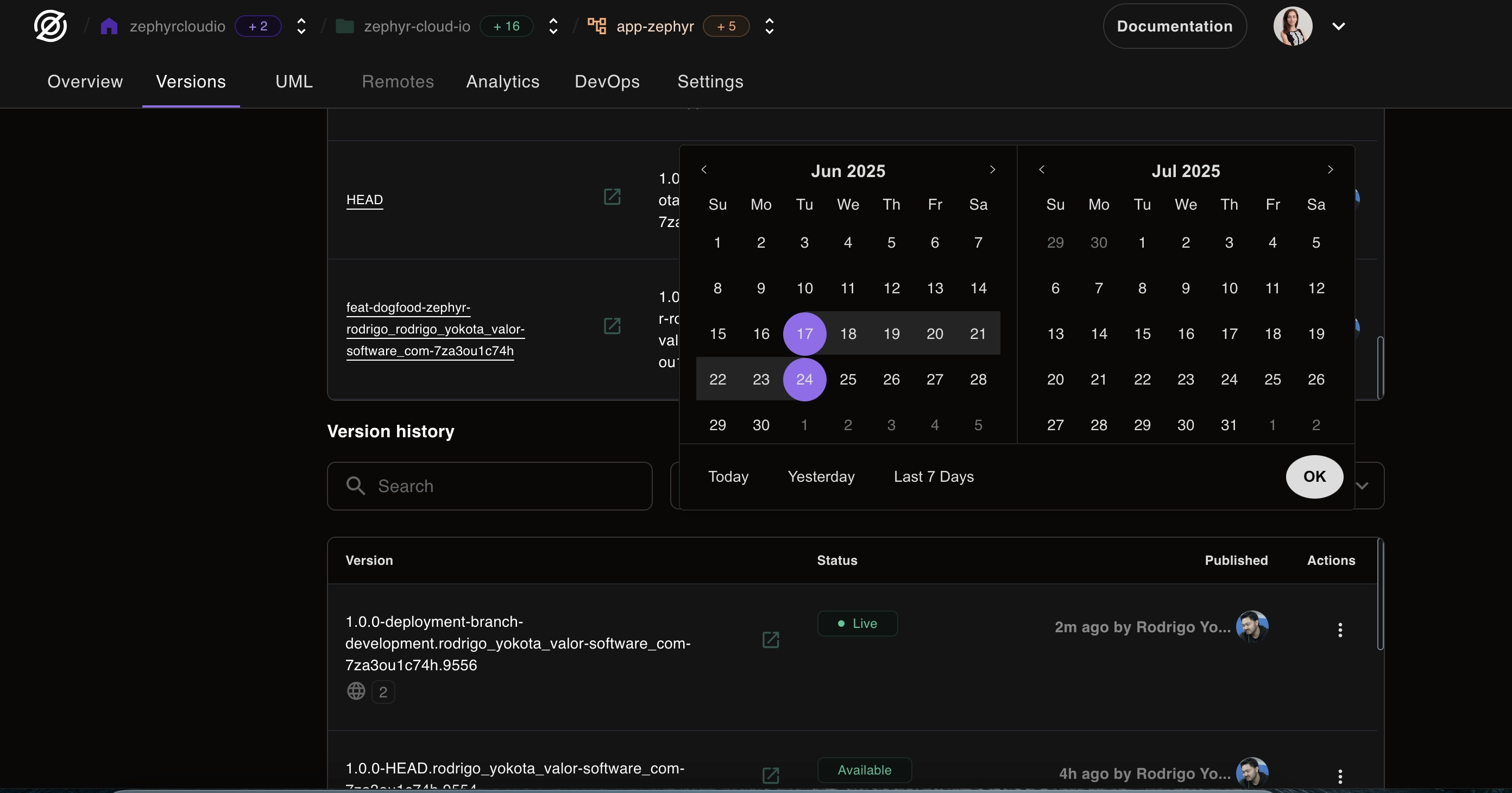
This release improves the Activity tab with better filtering and clearer counters, fixes environment stability issues, and makes copying server tokens easier with a built-in environment variable hint.
The Server Tokens settings page has been redesigned to make managing tokens clearer and easier, with a better layout for creating, editing, copying, and deleting tokens.
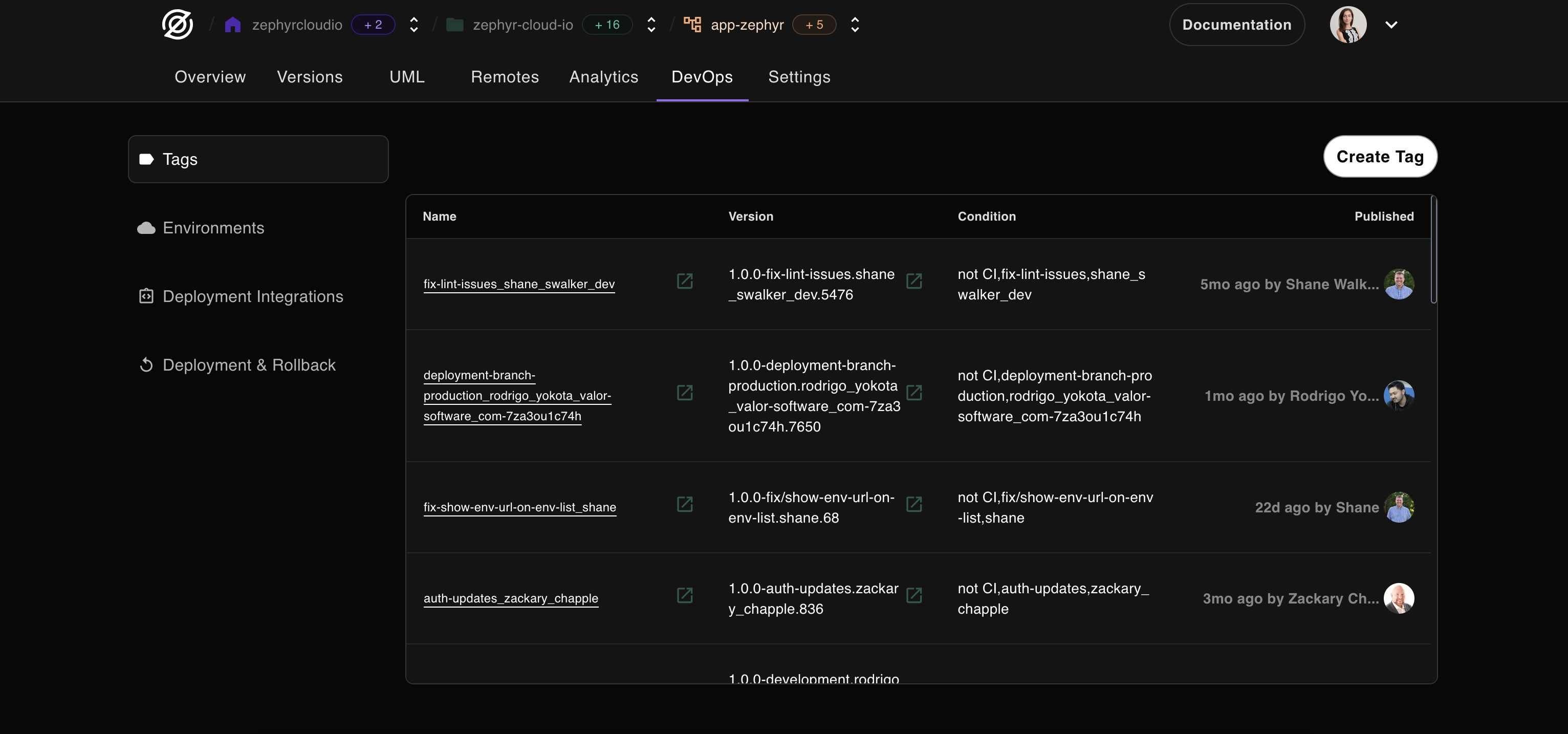
This release introduces dedicated CI tokens for automated workflows, makes manual redeploys more reliable by routing them through the same gateway as standard deploys, and improves the detail and accuracy of audit logs.
Custom DNS for environments now runs on Cloudflare Worker Routes for a more direct setup flow and cleaner teardown. Plus shorter environment and tag names, a fix for the org settings form, and integration modal polish.
This release improves page performance, permission reliability, audit log handling, and settings workflows across Zephyr. Teams should see faster organization pages, clearer loading states, and fewer interruptions when managing access, integrations, tags, and environments.
This release makes Zephyr feel faster and more reliable across day-to-day workflows, with quicker permission checks, more resilient backend behavior, and targeted UI polish in navigation and discovery surfaces.
This release makes Zephyr easier to integrate into your own workflows, speeds up how permissions are evaluated across the platform, and improves the accuracy and visibility of audit logs for projects and applications.
This release focuses on getting new users to their first deployment faster with a redesigned onboarding experience, alongside performance improvements to application list loading for larger organizations.
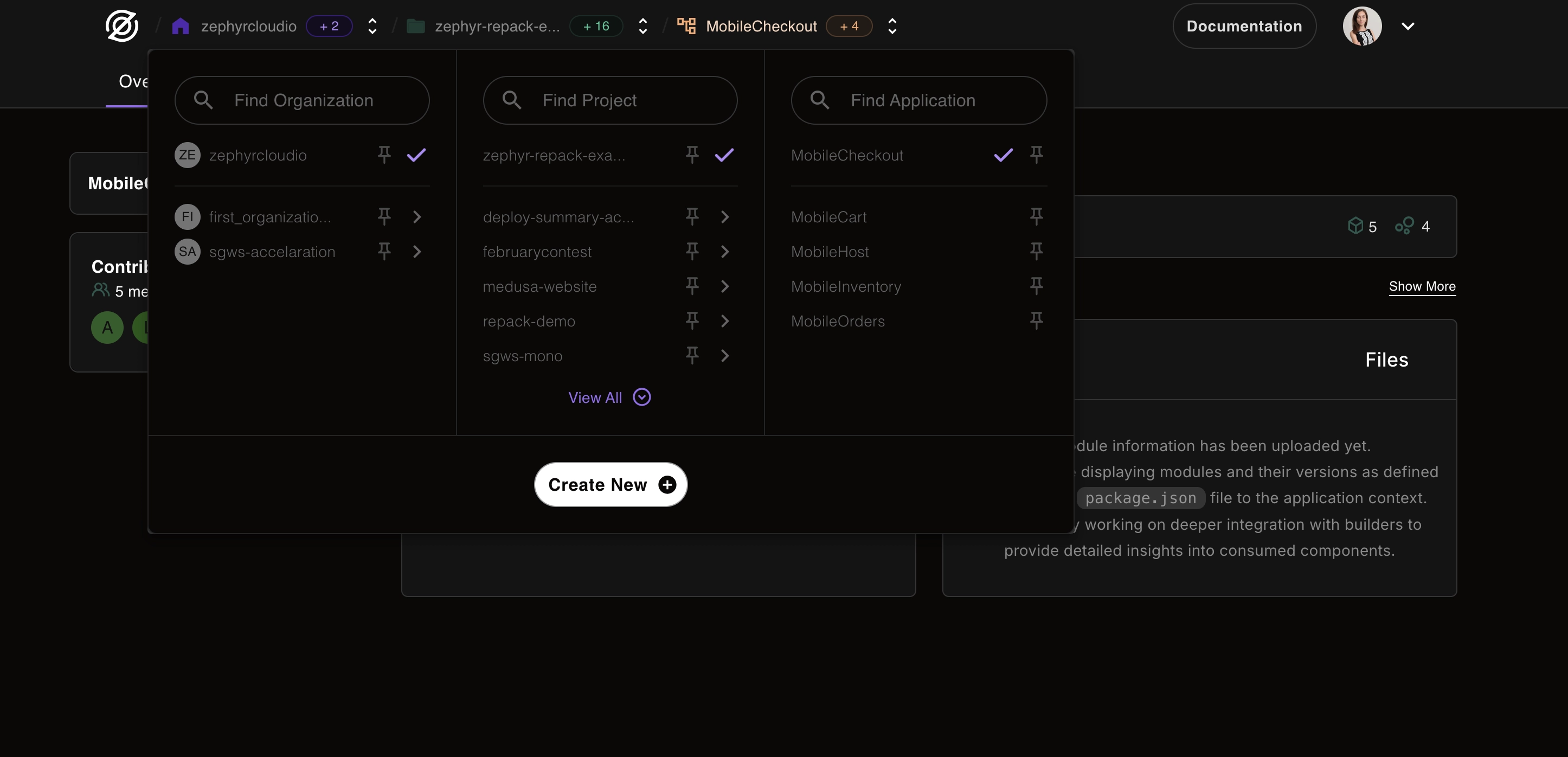
This release brings a redesigned sidebar, org switcher, and project and application list pages, along with a refreshed server token management interface. API performance has also been improved across environment and application queries.
This release adds email-verified open membership domains, tightens billing and subscription accuracy, and improves how teams manage tags, environments, and pinned versions.
This release adds lock controls for tags and environments, richer version metadata, a redesigned UML view, safer delete flows, and a broad set of reliability fixes across application and environment workflows.
This release introduces audit logging capabilities, a simpler redeployment flow, and several bug fixes that improve reliability and consistency across the platform.
This update improves deployment integrations, tag and environment flows, organization dashboards, and team permission behavior.
Foundational platform improvements across architecture, performance, and developer workflows to increase engineering velocity and end-user performance.
New Navigation, Multi-Org Subscriptions, Better Deployment Controls, and Akamai Improvements.
Environment variables and Remote Dependency Overrides (Beta), Astro support, Kanban updates, improved tag handling, and new server tokens — all to make app management smoother and faster.
Major UI/UX upgrades with Shadcn and Tailwind v4, authentication improvements, organization settings enhancements, and overall platform stability
Bug fixes for module federation dev server, UML graph performance improvements, and team synchronization enhancements