
EngineeringDeploymentCloudArchitecture
One Immutable Version
The Code and Content ship together
· 4 min read
A CMS and a deploy pipeline are two releases. The content team publishes the words. The platform team ships a build. Brand, legal, and engineering can see three versions of the same page.
EmDash and Zephyr remove that split for the marketing site. EmDash holds the content. Zephyr deploys each captured site to its own URL. Production is one tag. That tag is the words and the site.
Each product does one half of the work. EmDash alone keeps a draft. Zephyr alone deploys a build. A content save can then become the version that you release.
In this post, a capture is the stored input for one page. A sealed site is the build of a capture. The Zephyr tag is the public site. The tag refers to one sealed site.
The enterprise split
A large company already has a content system, a pipeline, a CDN, and a review habit for each one. A copy change and a code change follow different calendars. A rollback of one release leaves the other release in place.
This release is one artifact. The artifact is smaller than a new platform.
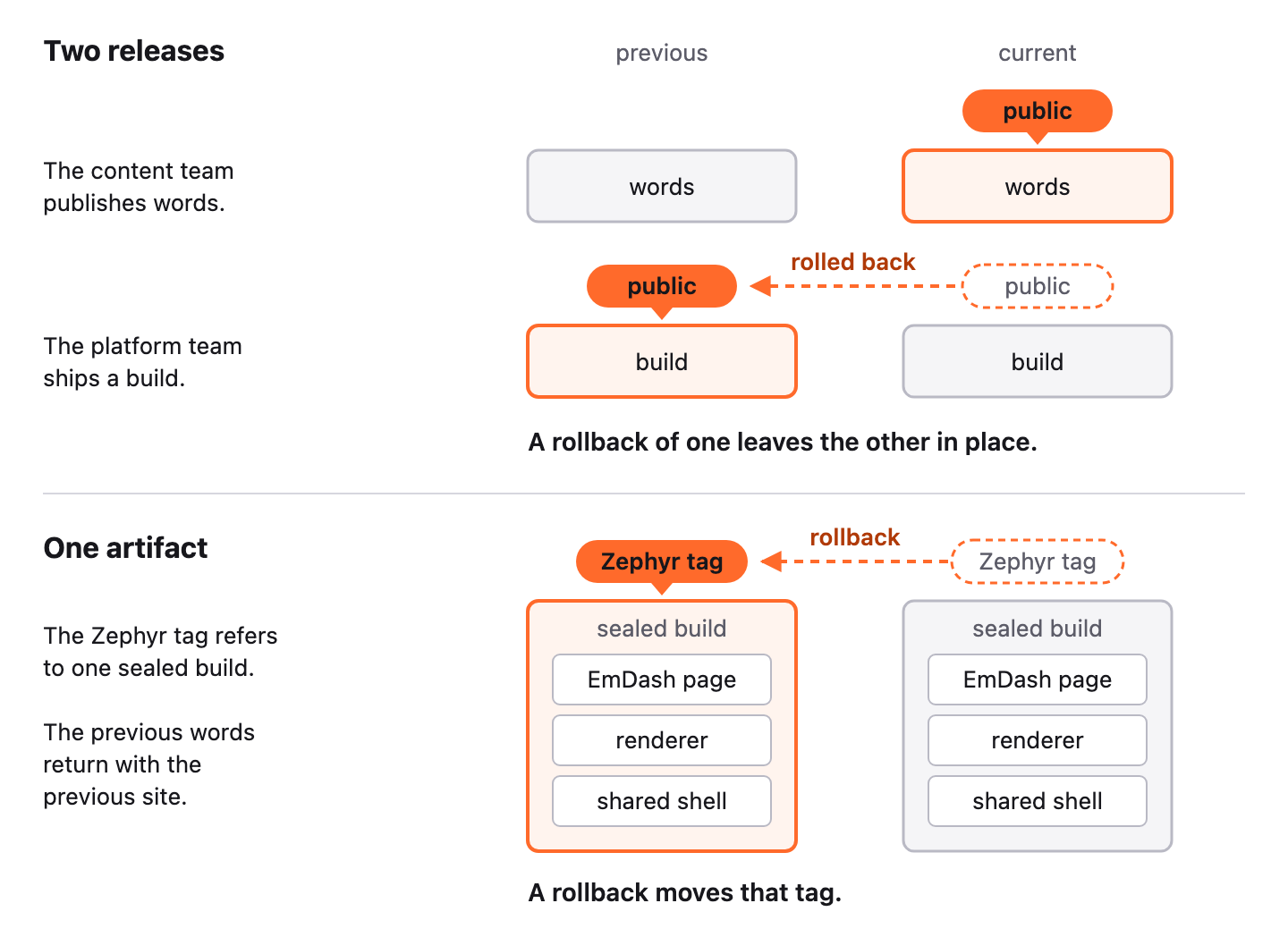
- The content is the EmDash page.
- The site is the sealed build of that page, the renderer, and the shared shell.
- The public site is the Zephyr tag for one of those builds.
The content team, the platform team, and the company open the same URL. A rollback moves that tag. The previous words return with the previous site. The words and the site were stored as one version.
A save is not a release
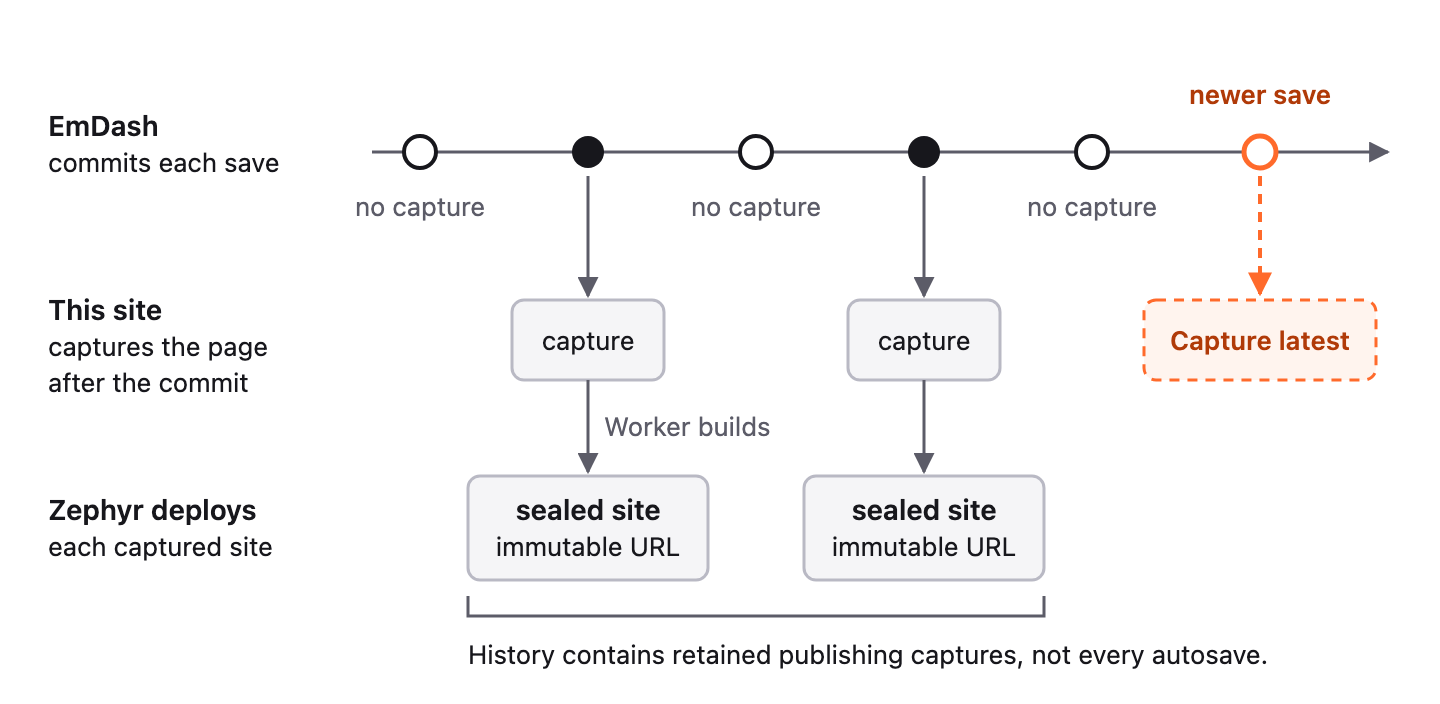
An editor saves a landing page or the site root in EmDash. The CMS commits that save first.
After the commit, the capture can store the page. The capture includes these parts:
- the page layout
- the shared shell settings
- the SEO dependencies
The build-control Worker stores that input. The Worker builds a sealed site from the input. Zephyr deploys that build to an immutable URL.
The capture runs after the commit. The capture does not recover every accepted save. That guarantee still requires a transactional outbox.
A newer save with no capture shows Capture latest on the Deployments page. History contains the retained publishing captures. History does not contain every autosave.
Release moves a tag
A person selects one captured version. The publish request records an idempotency key. The request also records the expected production snapshot.
The Worker combines that page with the current production versions of the other pages. Current shared site settings apply. The builder verifies the candidate. The builder uploads the candidate.
A durable publication intent promotes that exact version. The intent uses the native release path in Zephyr.
The release does not rebuild the selected version. The Worker records the publication only after the environment reports that version. A stale production base stops the promotion. If you close the browser, the close does not cancel an accepted publication.
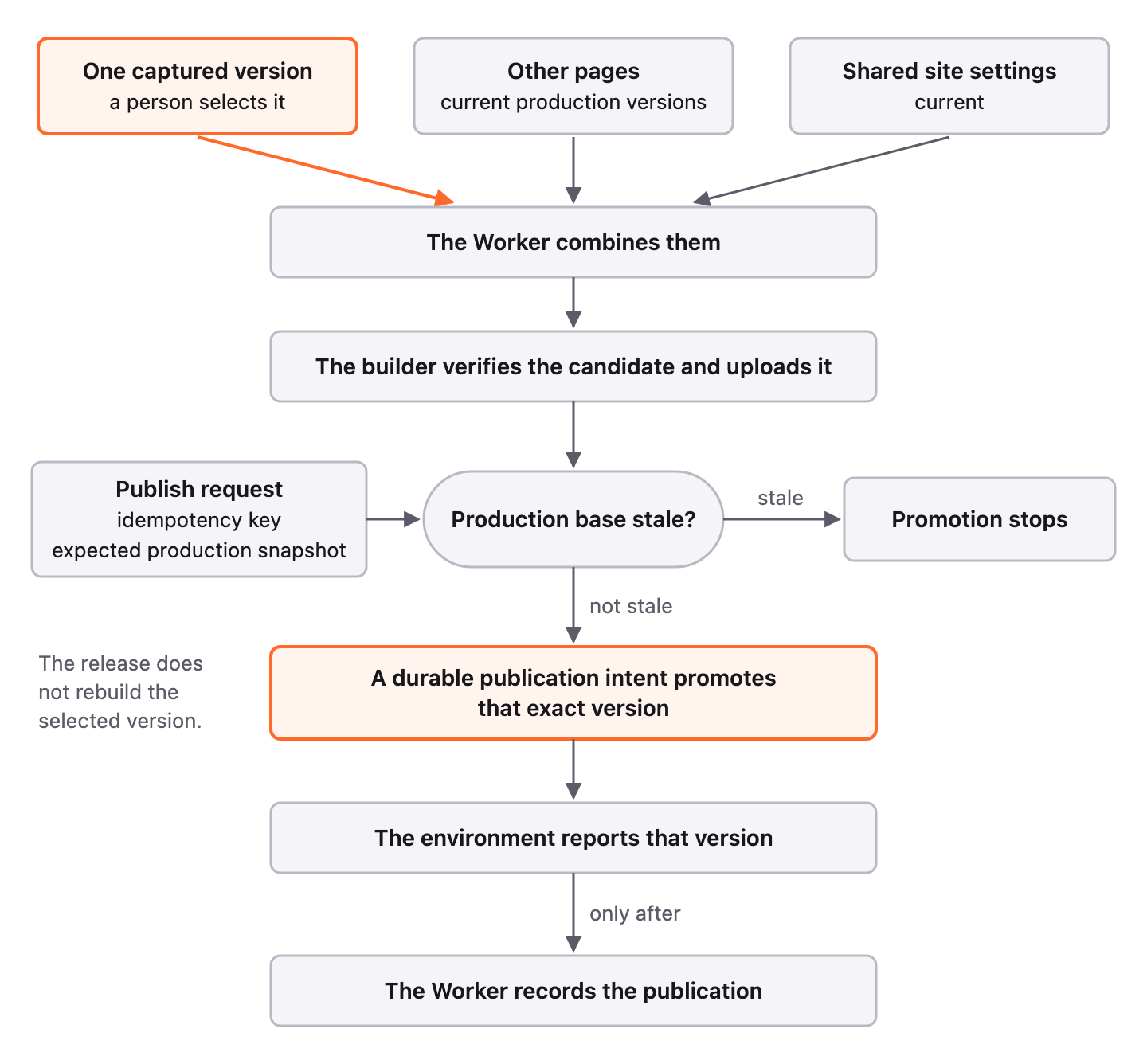
The company releases one snapshot of the pages. The release is not a content publish plus a separate deploy.
Rollback returns both
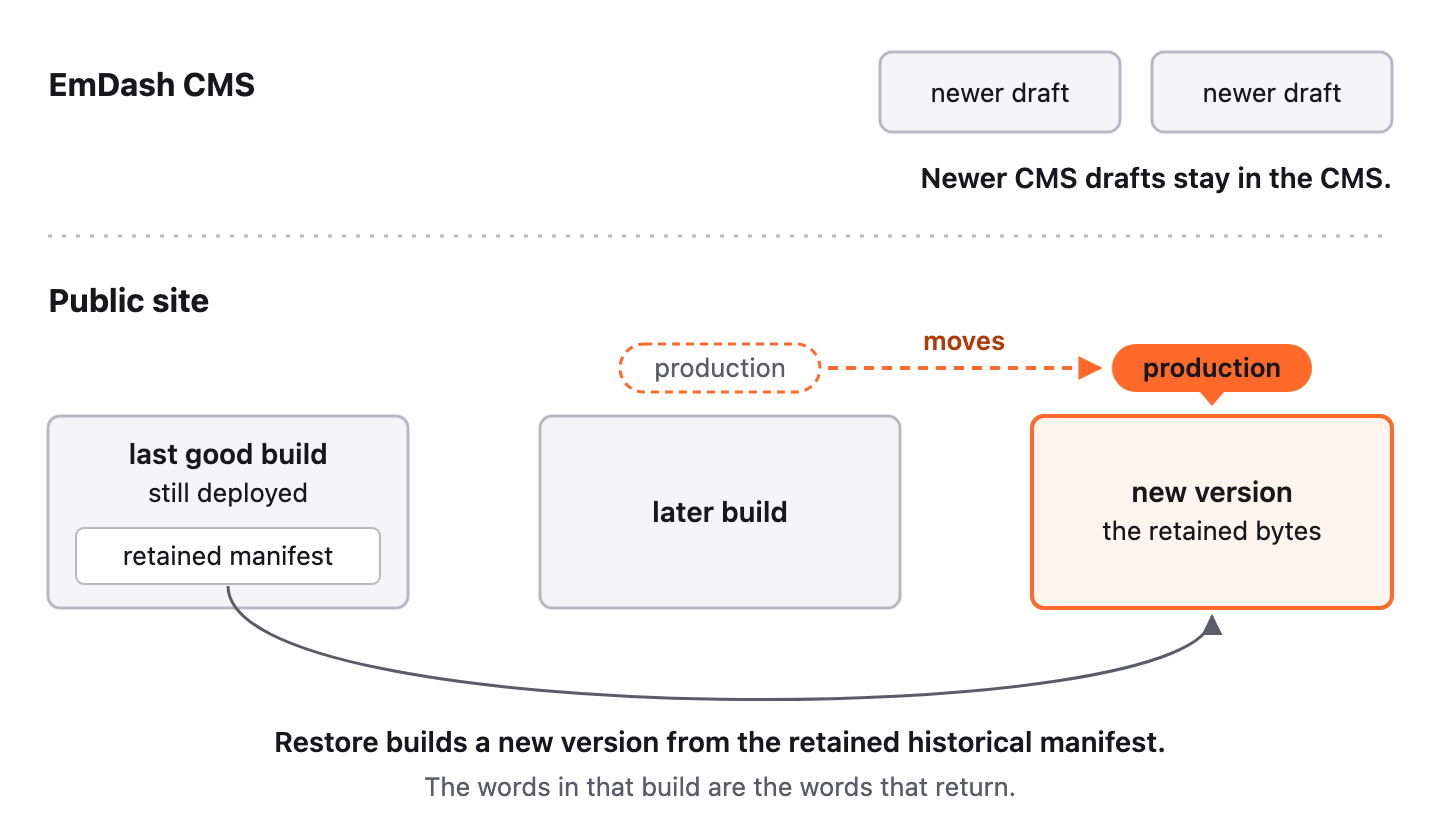
Restore builds a new version from the retained historical manifest of the last good build. Newer CMS drafts stay in the CMS. The public site returns to the retained bytes.
The last good build is still deployed. Production moves to that build. The words in that build are the words that return.
From proof of concept to plugins
We built this integration as a proof of concept for our marketing site. We plan to release official EmDash plugins in the near future.